
Project Description
Deposit Disputes
In 2022, deposit disputes accounted for 49% of complaints submitted by members. The process, communication, and overall experience was not up to par with what they experienced elsewhere.
Research
I started by conducting interviews with subject matter experts to establish rapport and gain insights into the current process. Subsequently, I compiled data on complaints categorized by product. Over a span of 13 months, I gathered data from all channels using Tableau, identifying a total of 268 complaints related to disputes, which represented 2.1% of all complaints. Of these disputes, 51% were escalated to a manager.
Additionally, I reviewed complaints received by our call center specifically related to deposit products from January to May 2022. During this period, there were 1,146 complaints in total, with 766 of these escalated.
Following data analysis, my next focus was on examining member touchpoints. I identified two primary digital channels for submitting deposit disputes: Online Banking (web) and our native mobile app (iOS and Android). I meticulously mapped out the user flow for each touchpoint to empathize with members who submit disputes.
To enrich my understanding further, I conducted searches within our listening posts, particularly Medallia, spanning the last 12 months. This included gathering insights from various survey types sent to members.
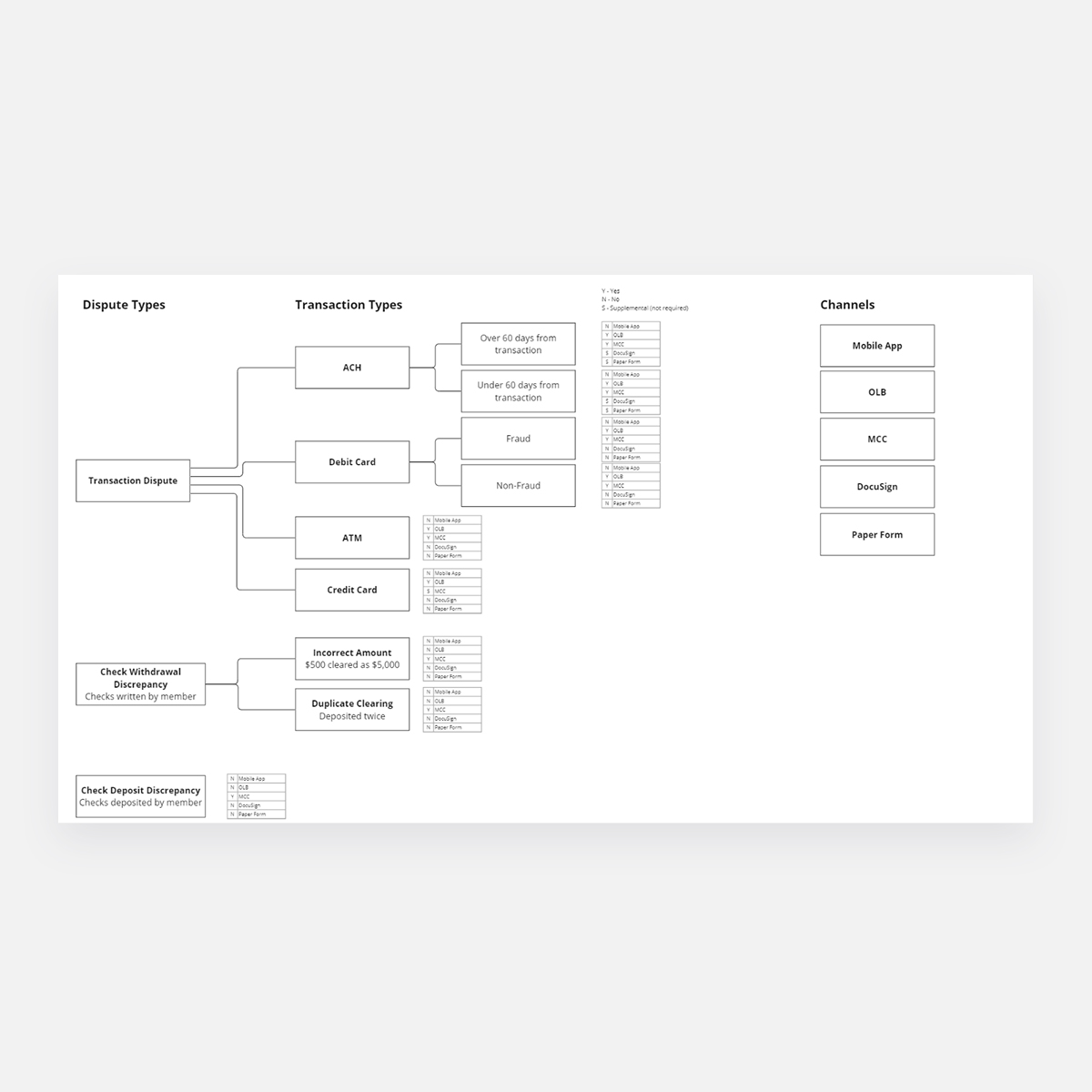
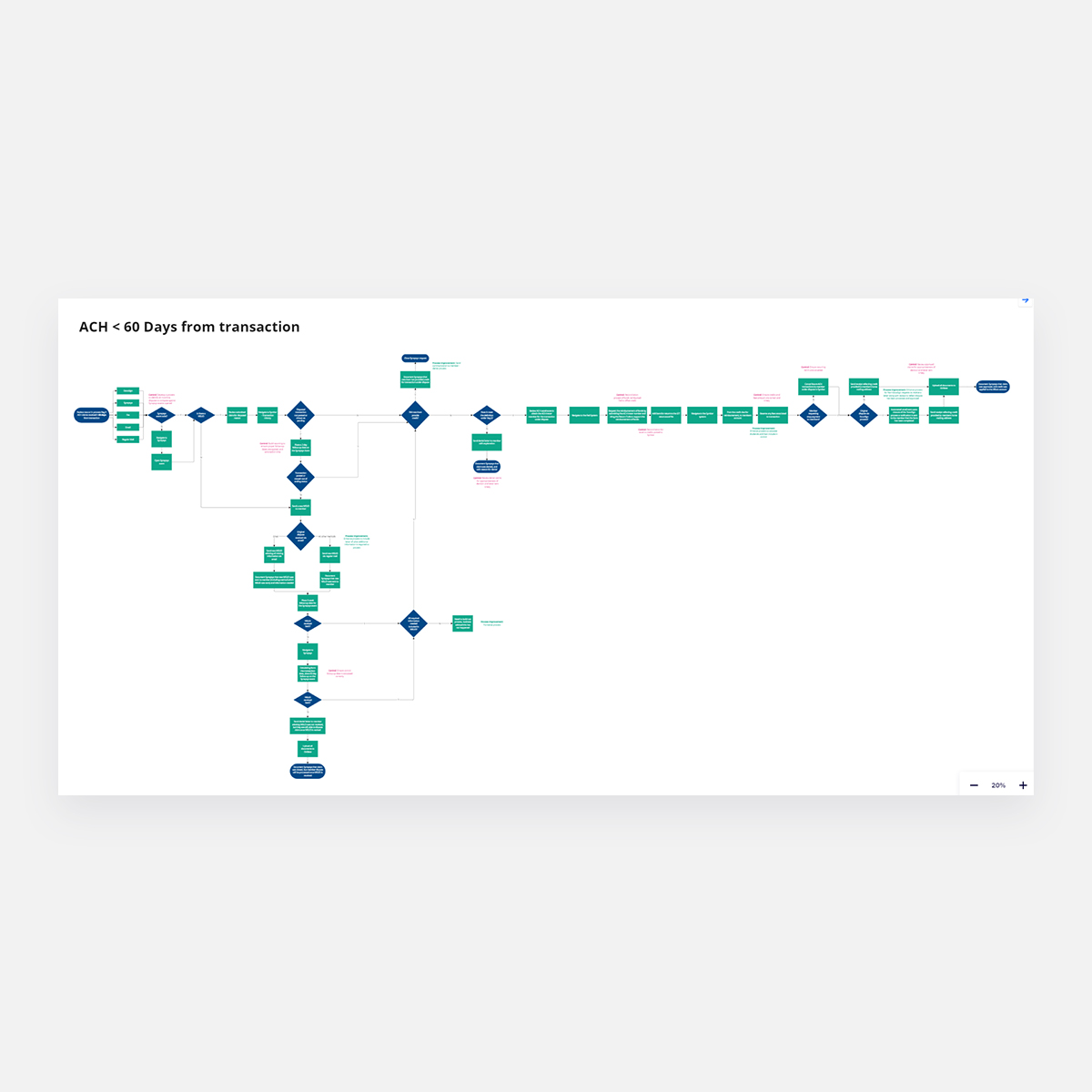
It was crucial for me to comprehensively grasp the different types of disputes, transaction categories, and channels through which disputes are initiated. I mapped out these details, specifying the digital channels or touch points where members submit their disputes. Additionally, I updated an outdated VISIO file documenting the internal dispute resolution process, transferring it to MIRO, and discussing it with our subject matter experts. This documentation covered categories such as ACH transactions within 60 days, ACH transactions beyond 60 days, debit card fraud and non-fraud, and ATM disputes.
Service Blueprint
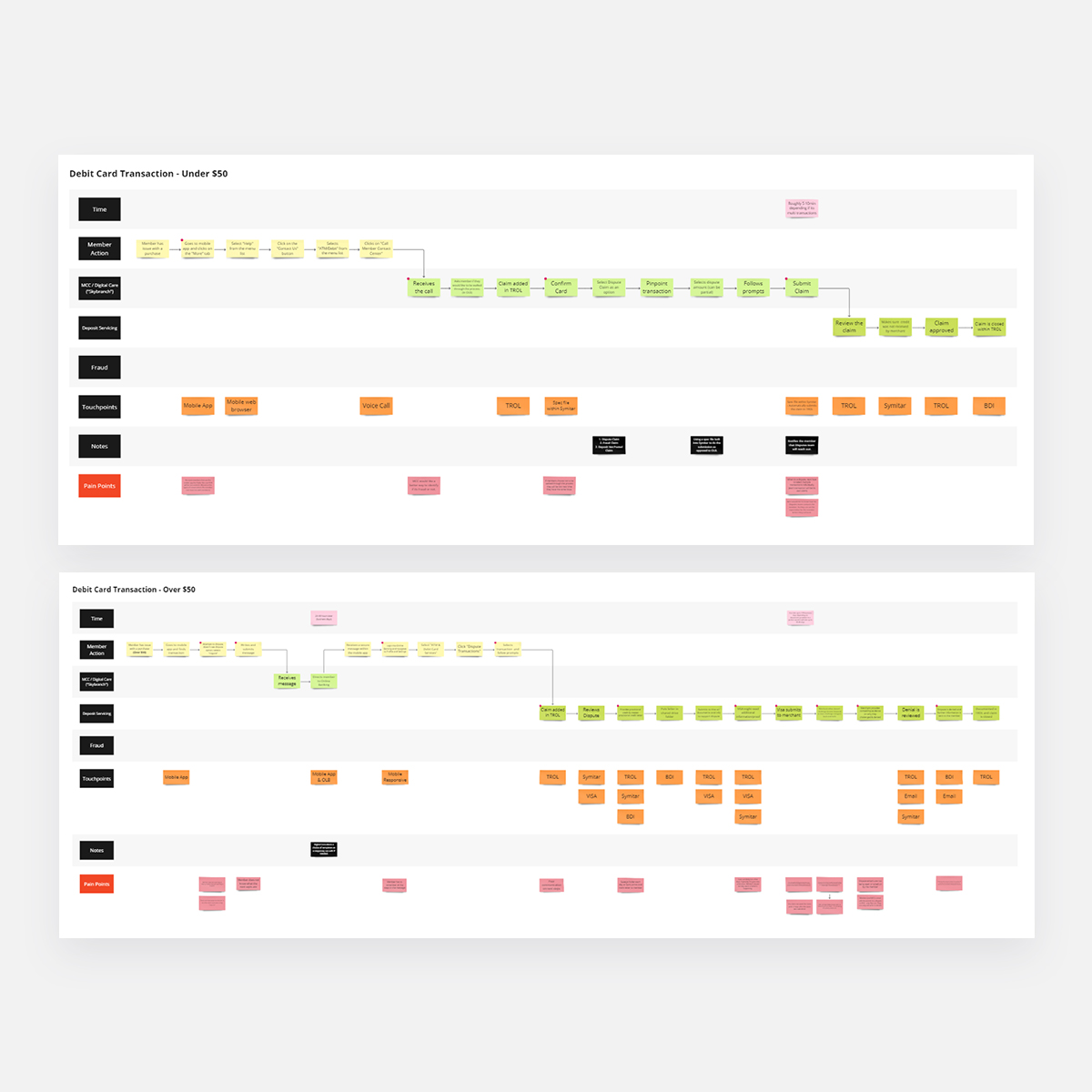
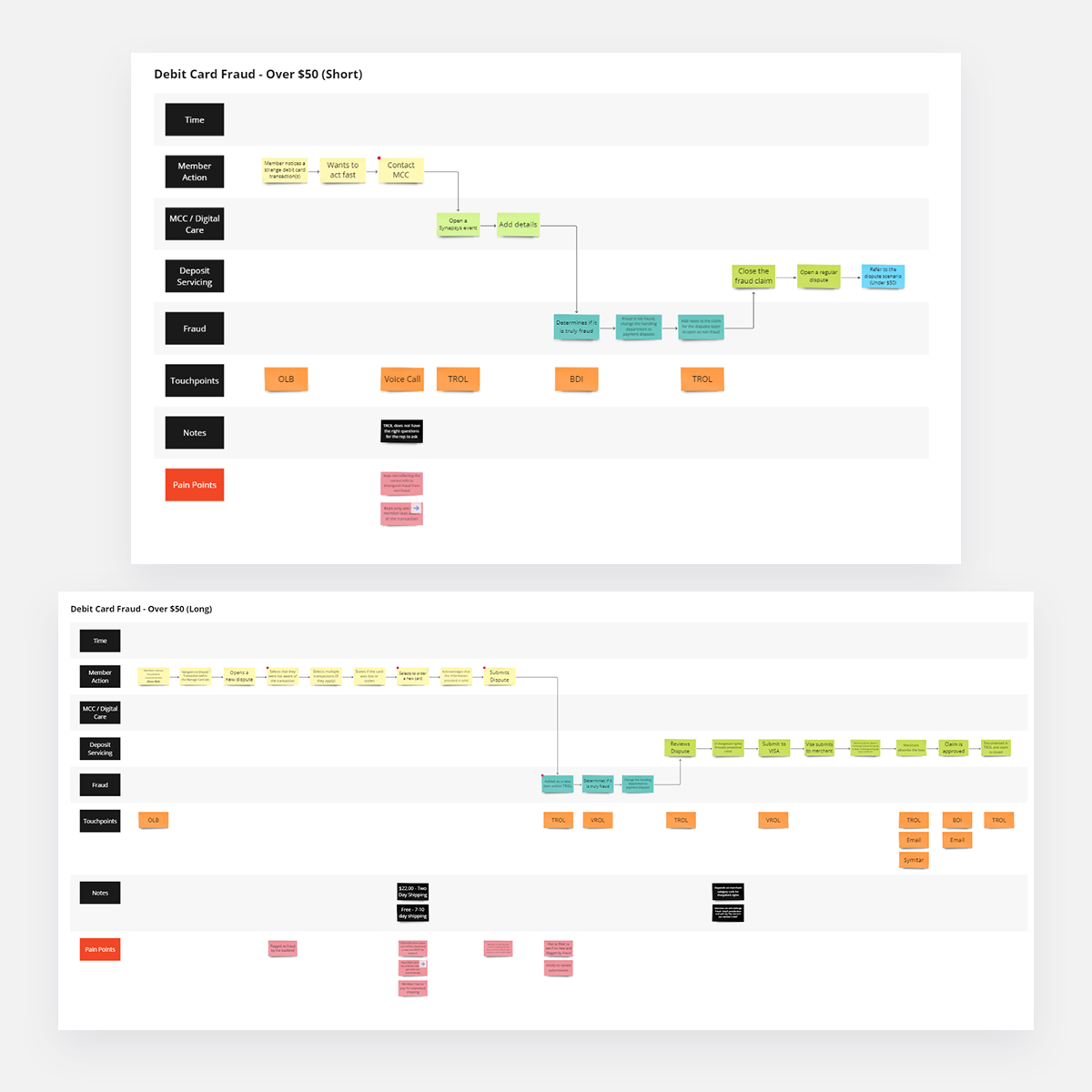
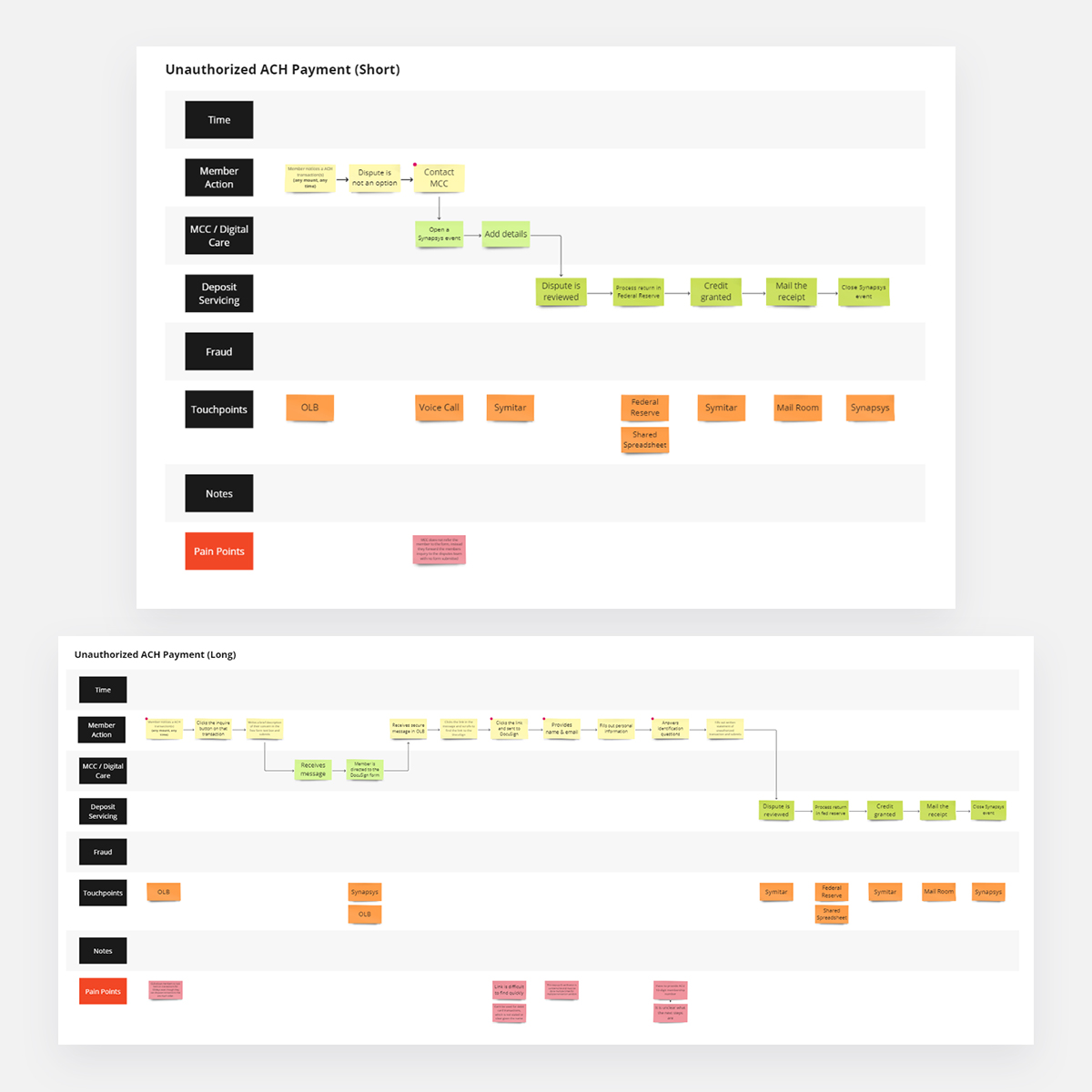
To enhance our understanding and improve the member experience across various touchpoints, we opted to create Service Blueprints instead of traditional journey maps. Our objective was to comprehensively illustrate the interactions of members, employees, systems, and vendors within our processes.
We organized a series of workshops where key stakeholders, including myself, the business owner, and respected representatives, collaborated closely. Together, we mapped out these experiences in detail. Through collaborative efforts, we developed a total of six service blueprints that effectively depict the end-to-end service delivery processes.
These service blueprints were subsequently shared across the organization, providing valuable insights into how different components interact and influence the member experience. This initiative aims to identify areas for improvement and ensure a more seamless and customer-centric service delivery model.
Conclusion
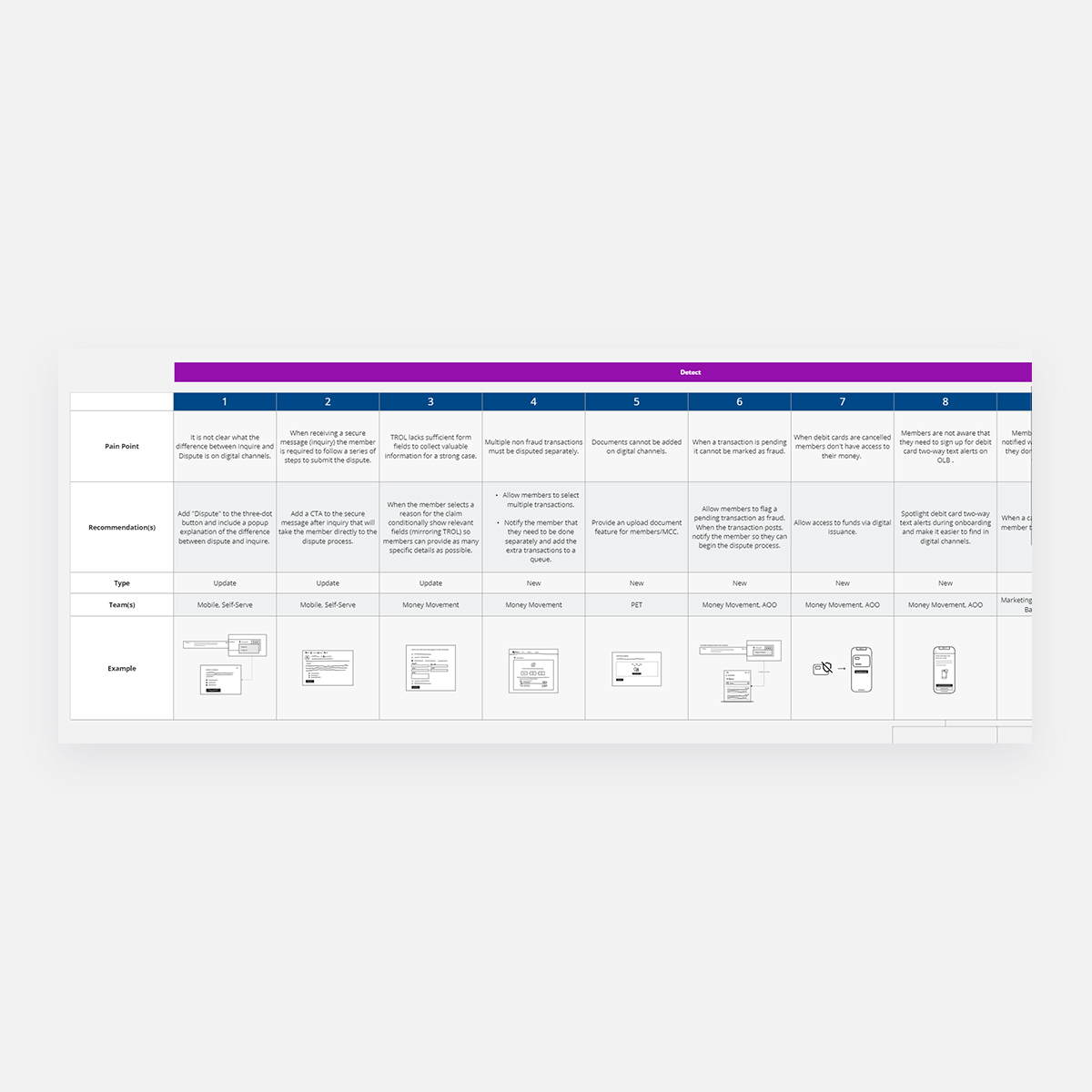
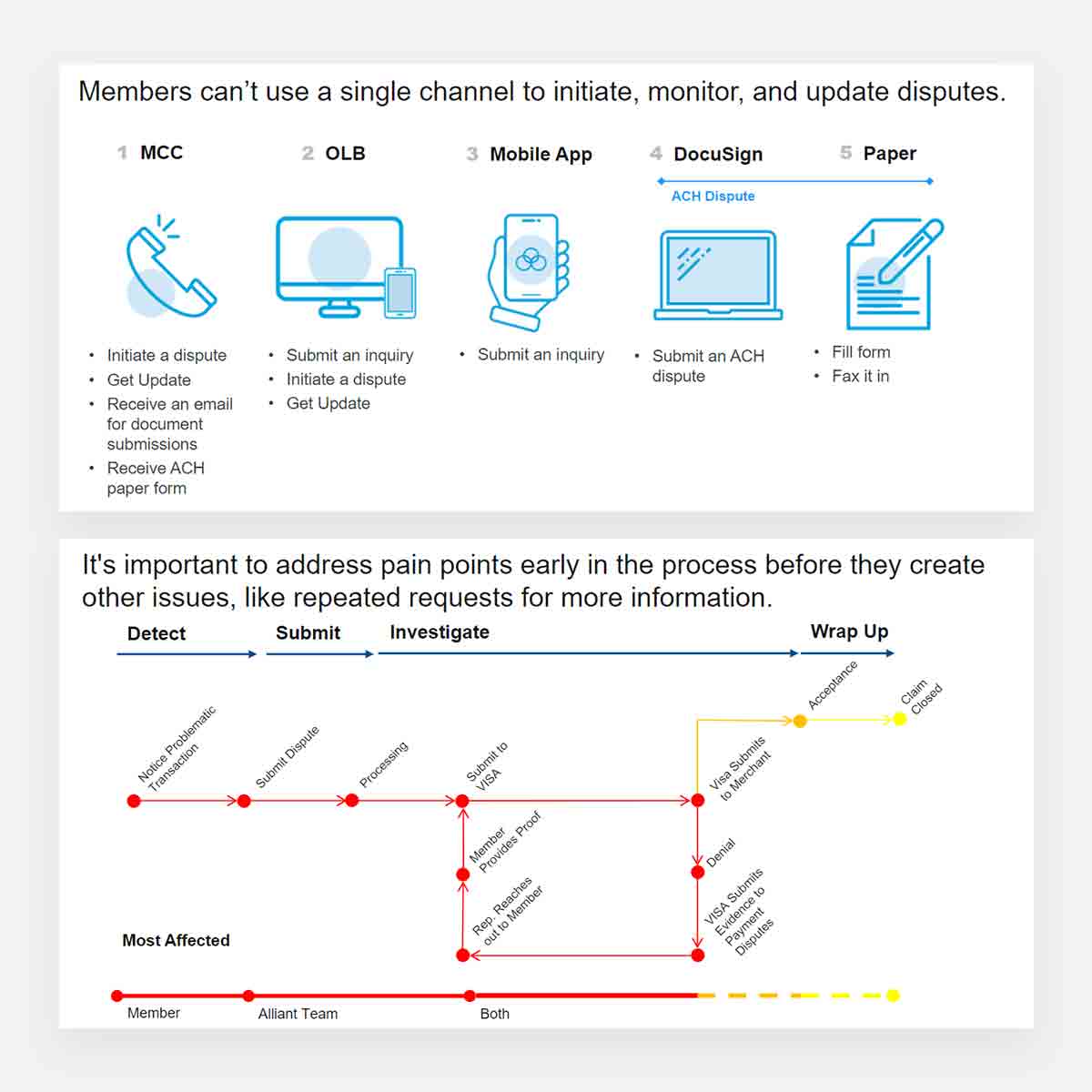
During our study, we identified two primary pain points affecting members: the inability to use a single channel for initiating, monitoring, and updating disputes, and the need to initiate disputes differently for each transaction type. After analyzing service blueprints and synthesizing interview findings, I formulated a series of recommendations aimed at alleviating these pain points for both members and stakeholders.
These recommendations are designed to enhance the current process rather than completely redesigning it from scratch. It was important for our design team to maintain focus on improving the future experience without losing sight of our immediate goals. To ensure clarity, we developed an ideal dispute resolution experience with key performance indicators (KPIs) to support these efforts. The ideal experience centers around achieving one-step resolutions, allowing members to initiate claims through their preferred channels, and ensuring prompt turnaround times. These improvements are expected to increase member-initiated interactions per dispute, enhance overall satisfaction (OSAT), and reduce claim resolution times.
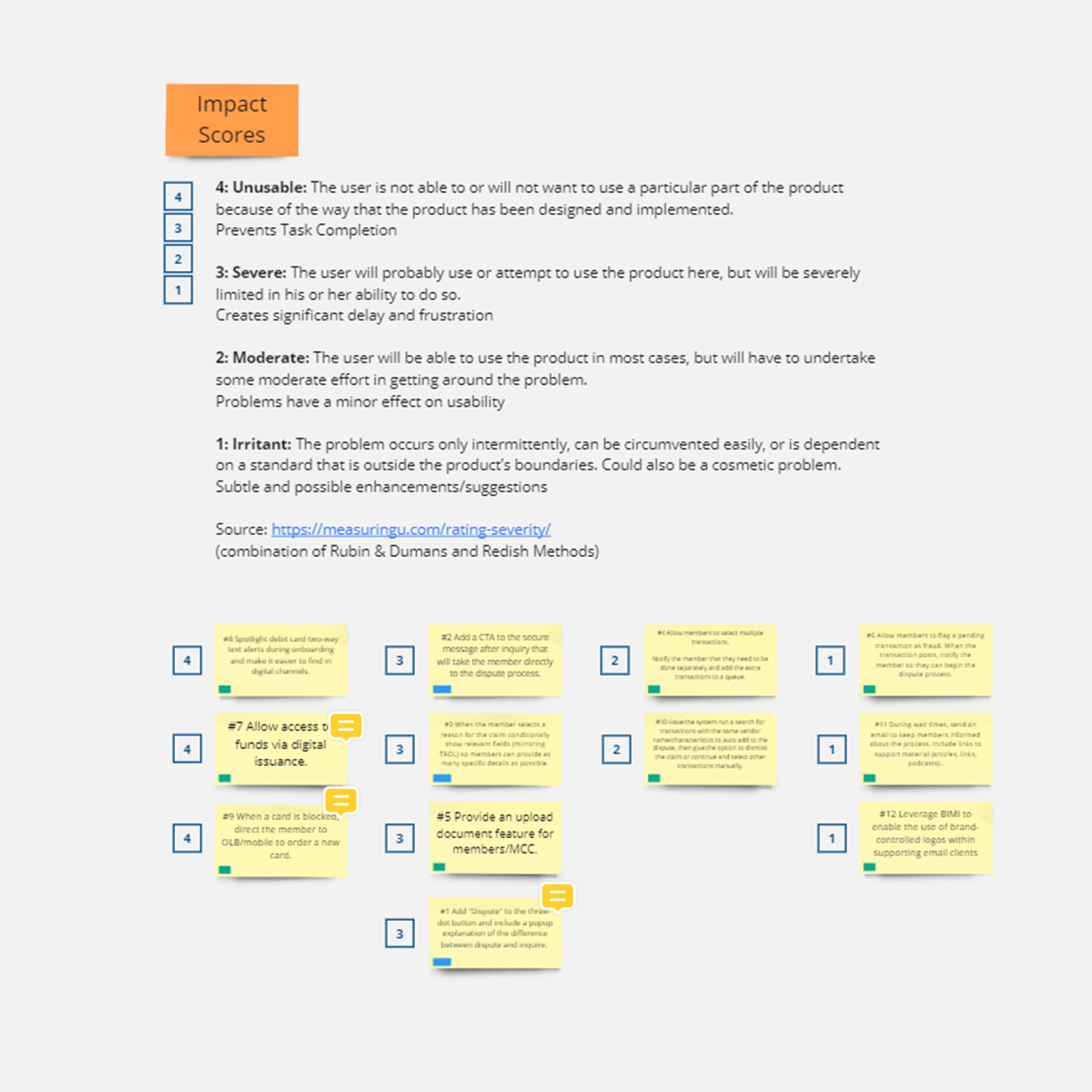
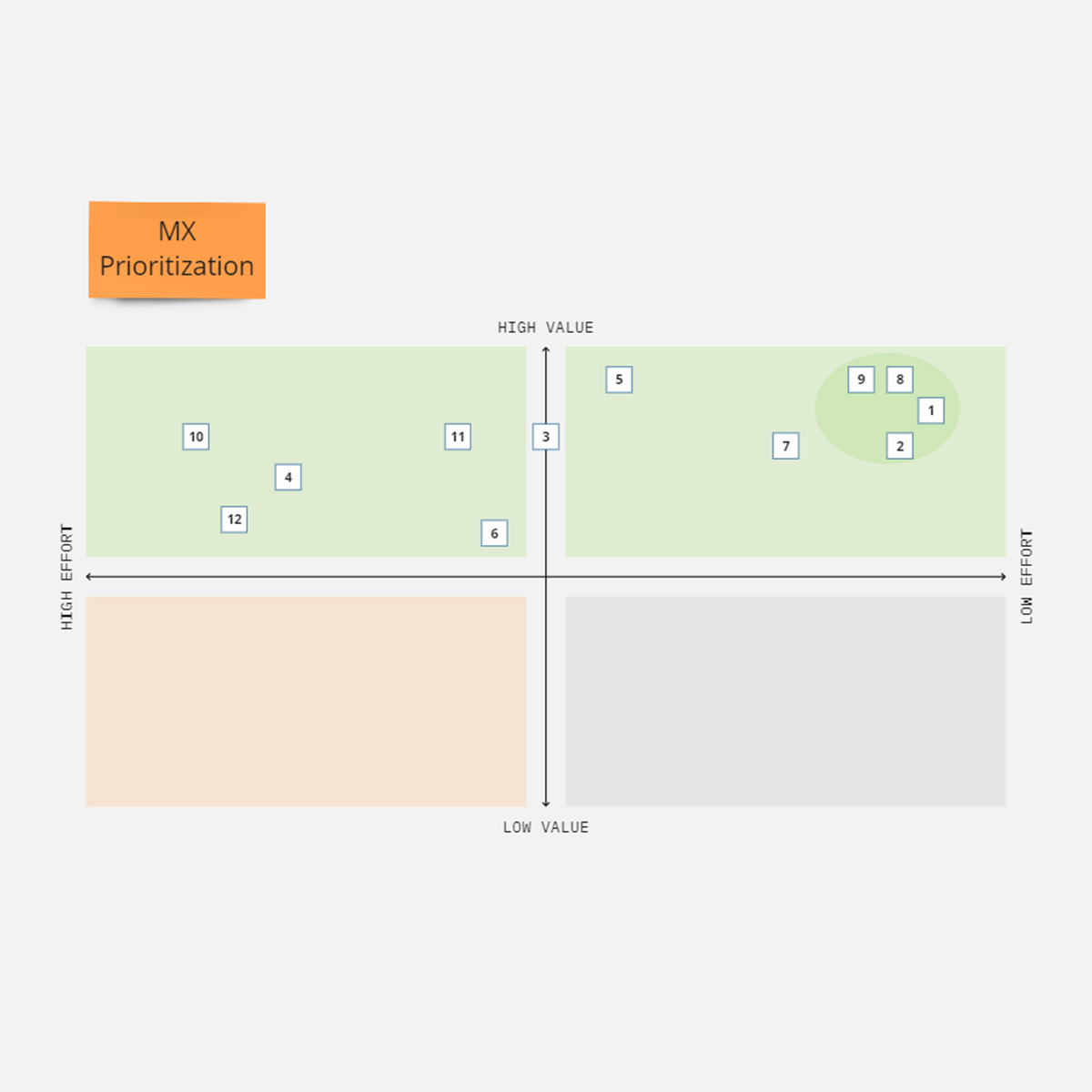
To address the current challenges effectively, I created a matrix detailing each pain point, its corresponding recommendation, the responsible team, and provided a prototype example for clarity. I collaborated with the design team to review these recommendations, assigning impact scores using a combined approach based on Rubin & Dumas and Redish methods. Subsequently, I collaborated with product owners to create a value/effort matrix. This matrix helped prioritize initiatives, determining whether they should be added to our backlog or fast-tracked into an upcoming Product Increment (PI).