
Project Description
Alliant Network (Indirect Lending)
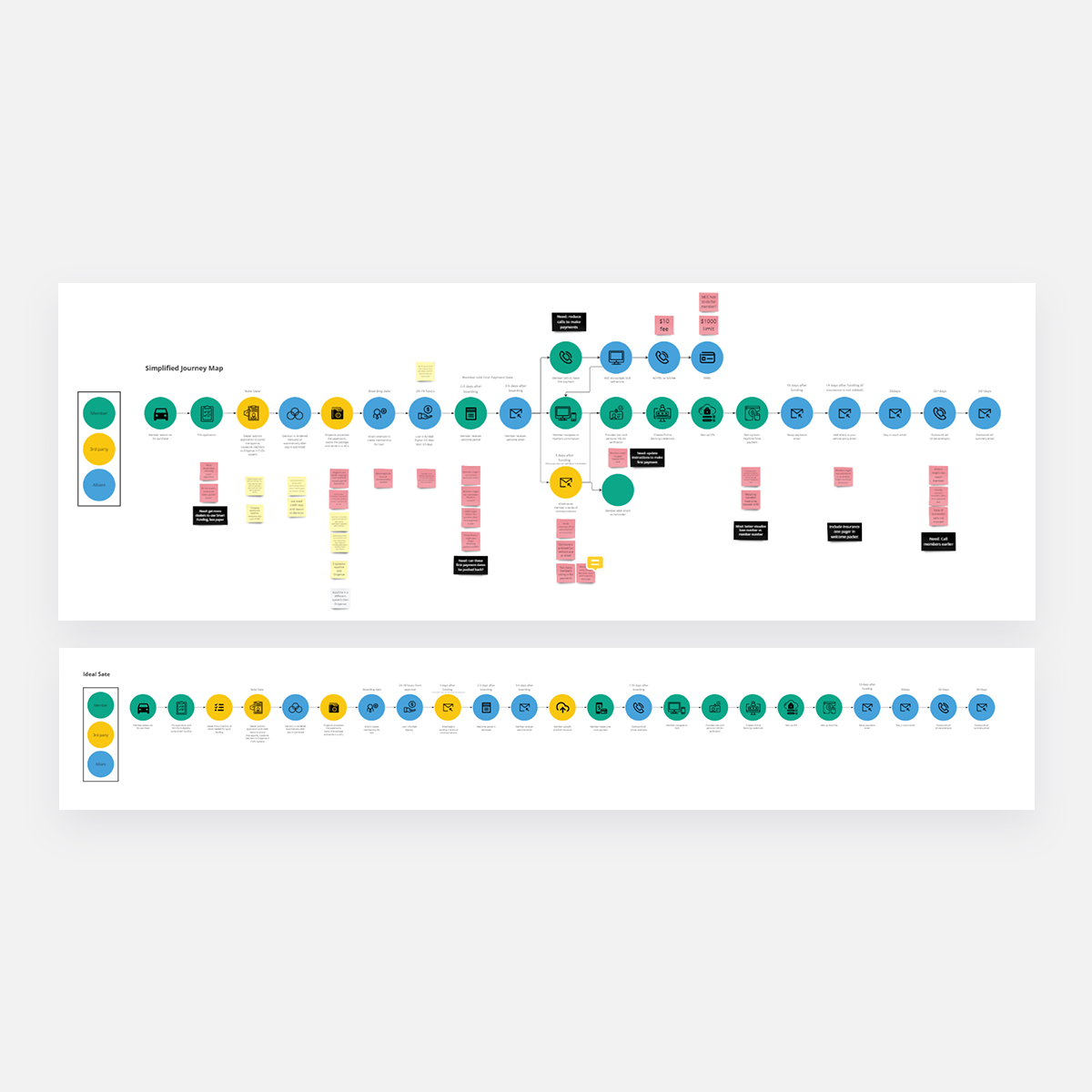
Alliant Network members are a seg group who have selected Alliant as the funder of their auto or RV loan. Our goal for this study was to determine how we might increase these members satisfaction with their loans and their payment processing pain points. In 2022 the OSAT score for Alliant Network was below threshold. In December, dissatisfied members mentioned:
- Difficulty setting up payments
- Payment processing
- Inability to make payments on mobile
- Not receiving account information
Research
Analysis
Design
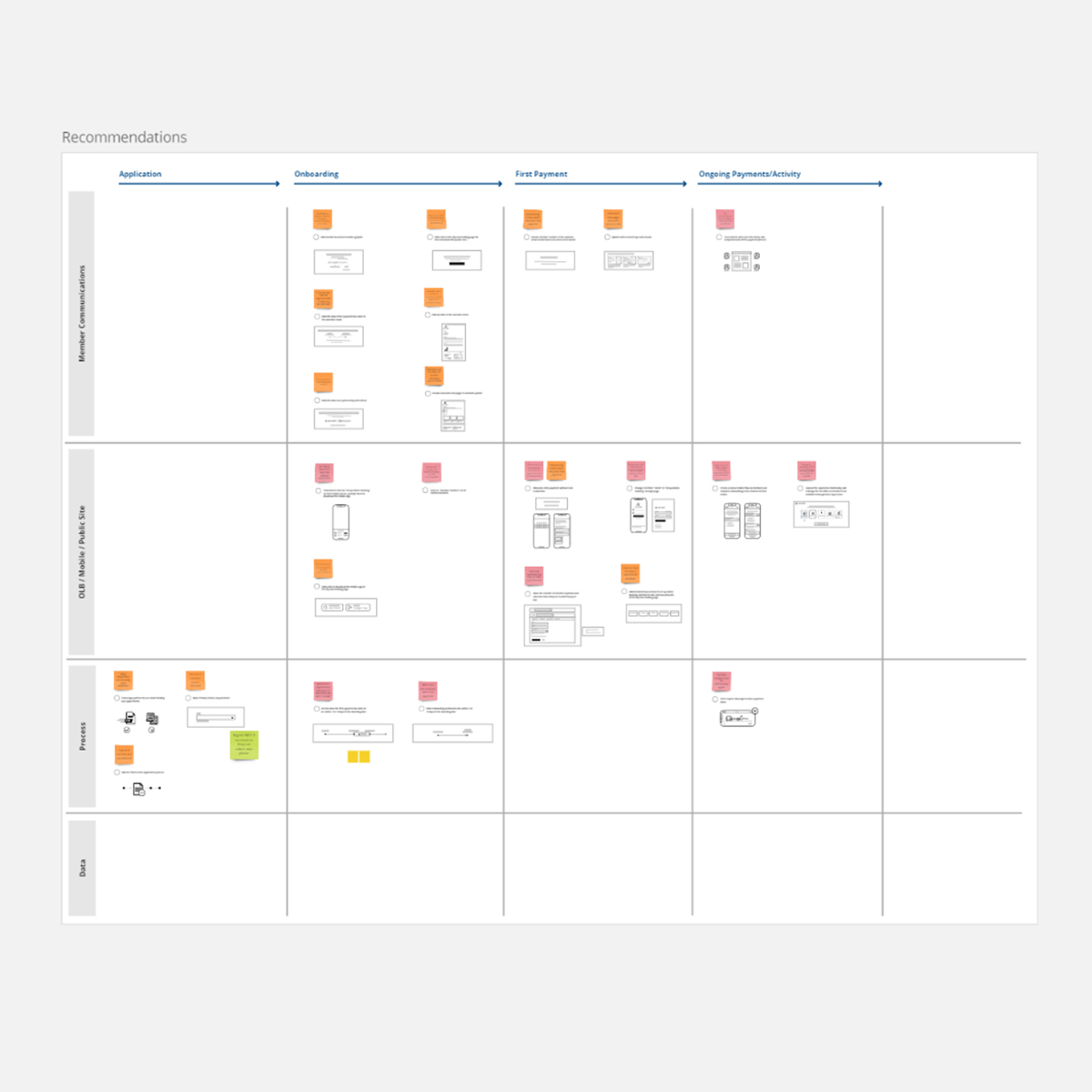
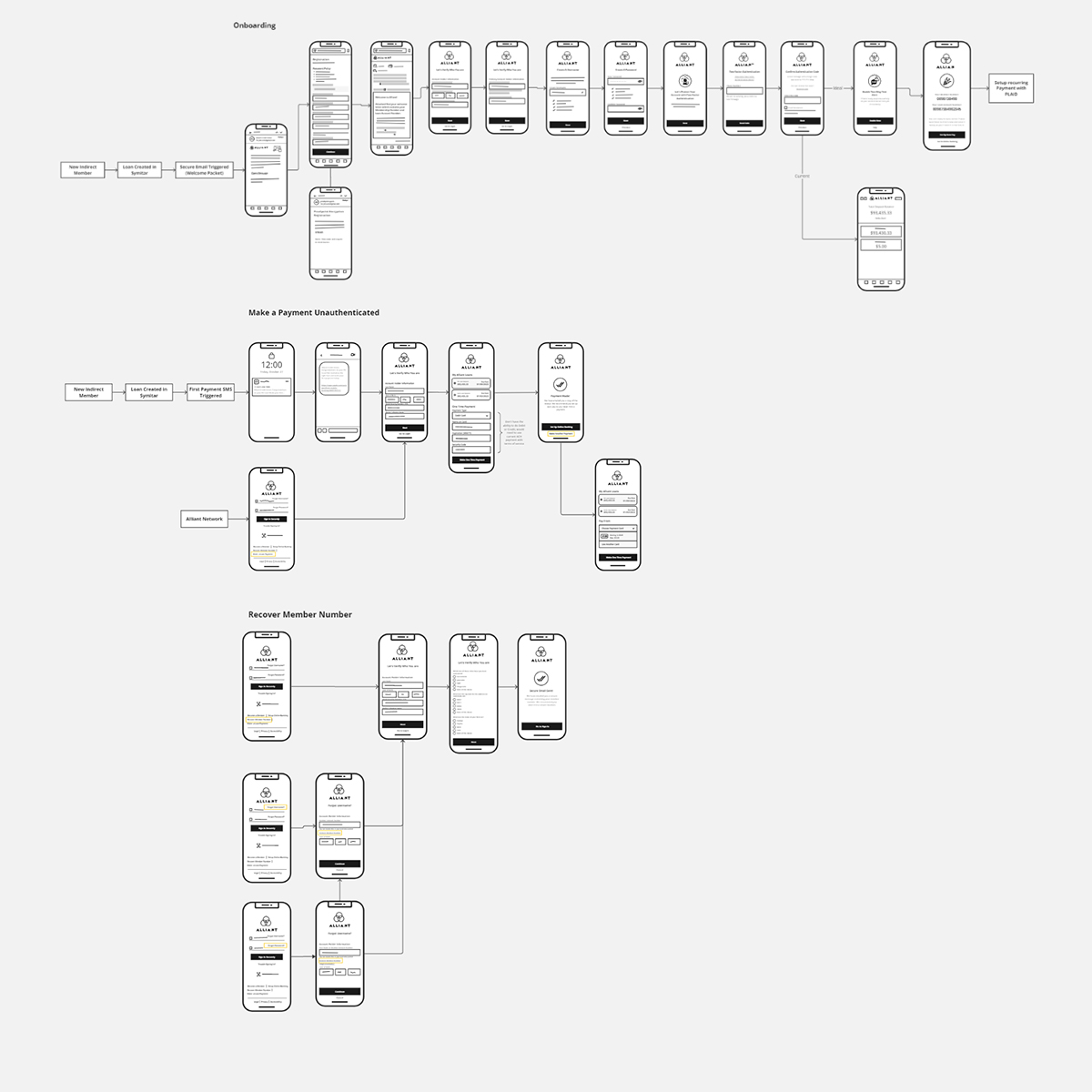
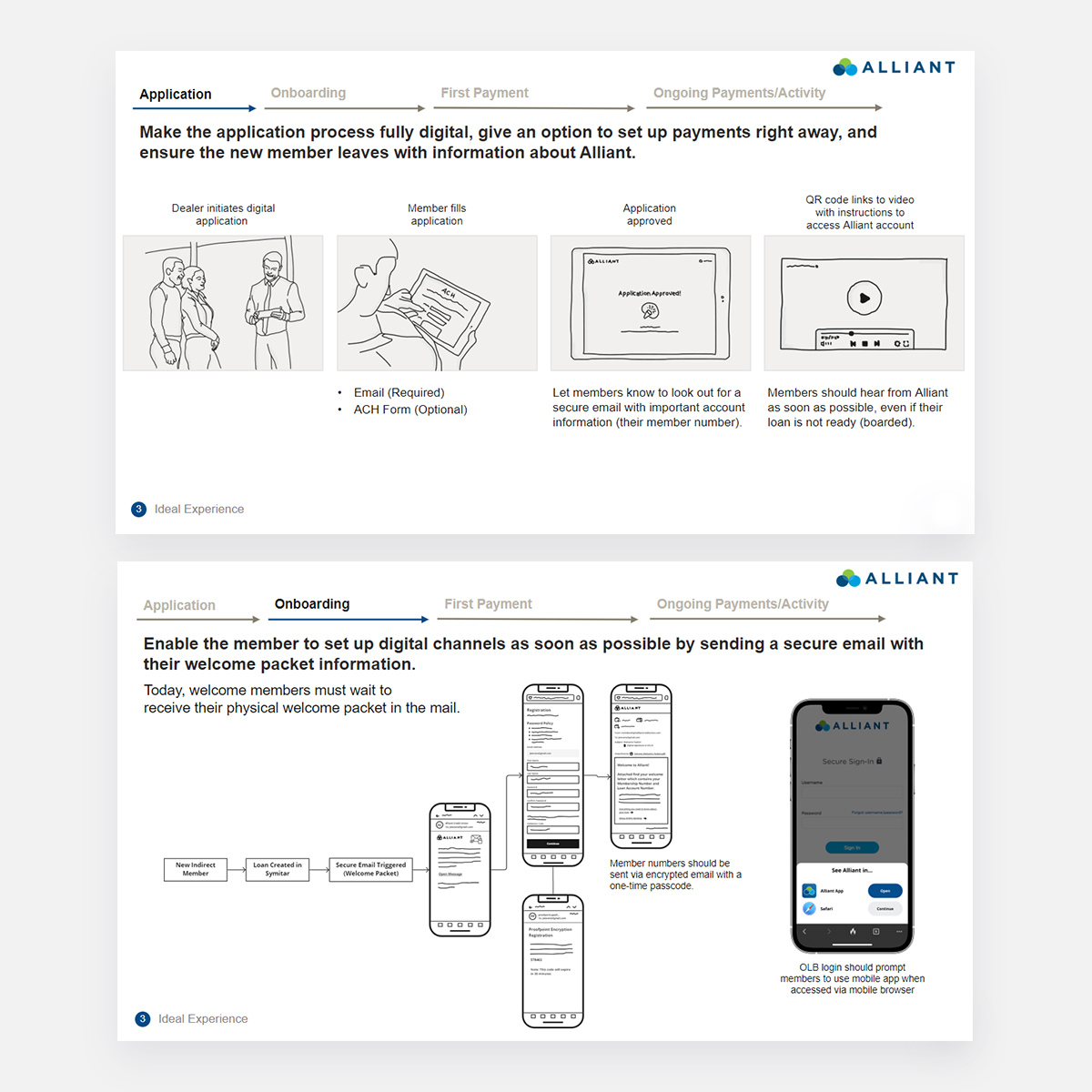
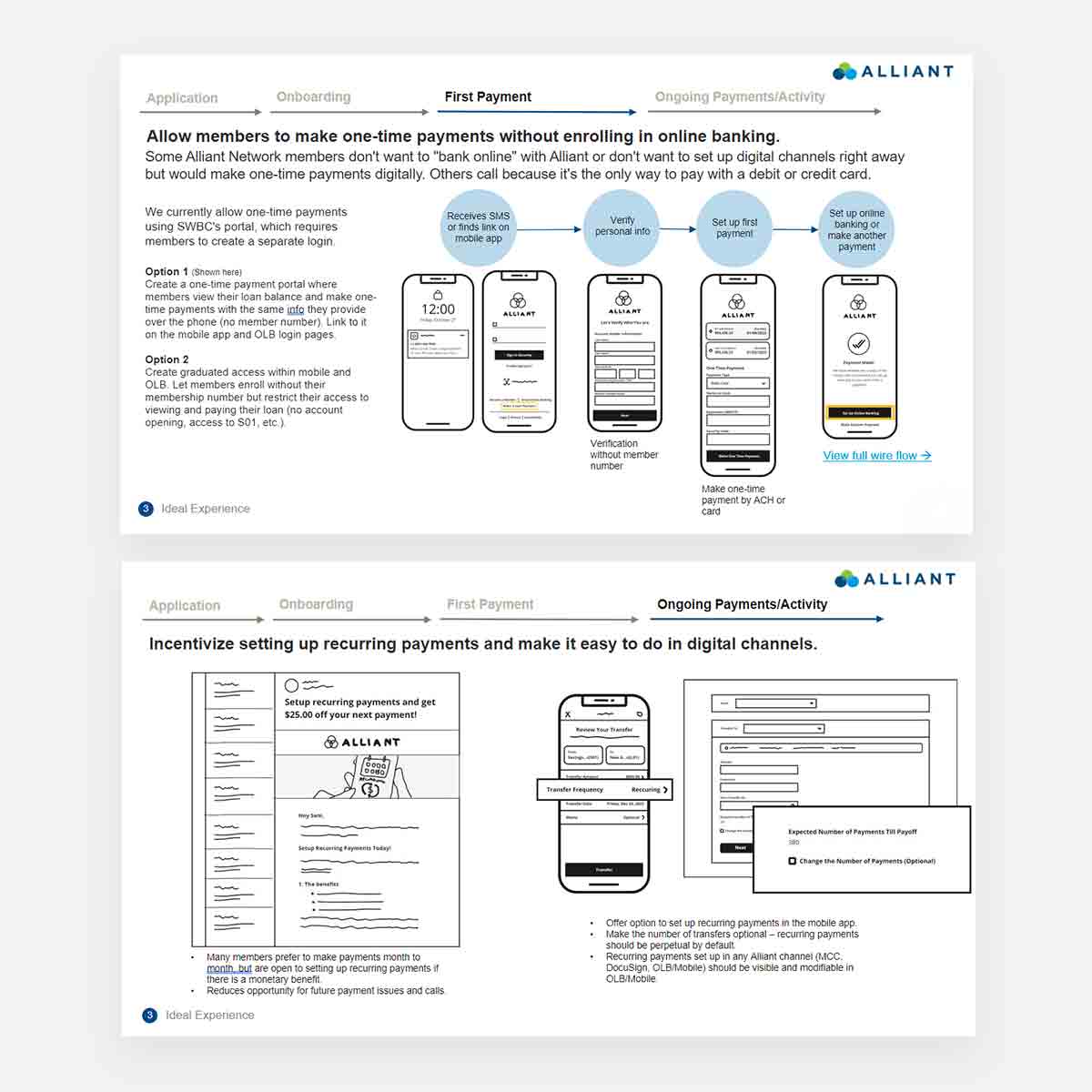
Experience recommendations were categorized according to different stages of the member journey. Each recommendation was paired with a prototype to visualize its implementation.
For the application stage, our recommendations focused on streamlining the process to be fully digital, offering an option to set up payments immediately, and ensuring new members depart with comprehensive information about Alliant.
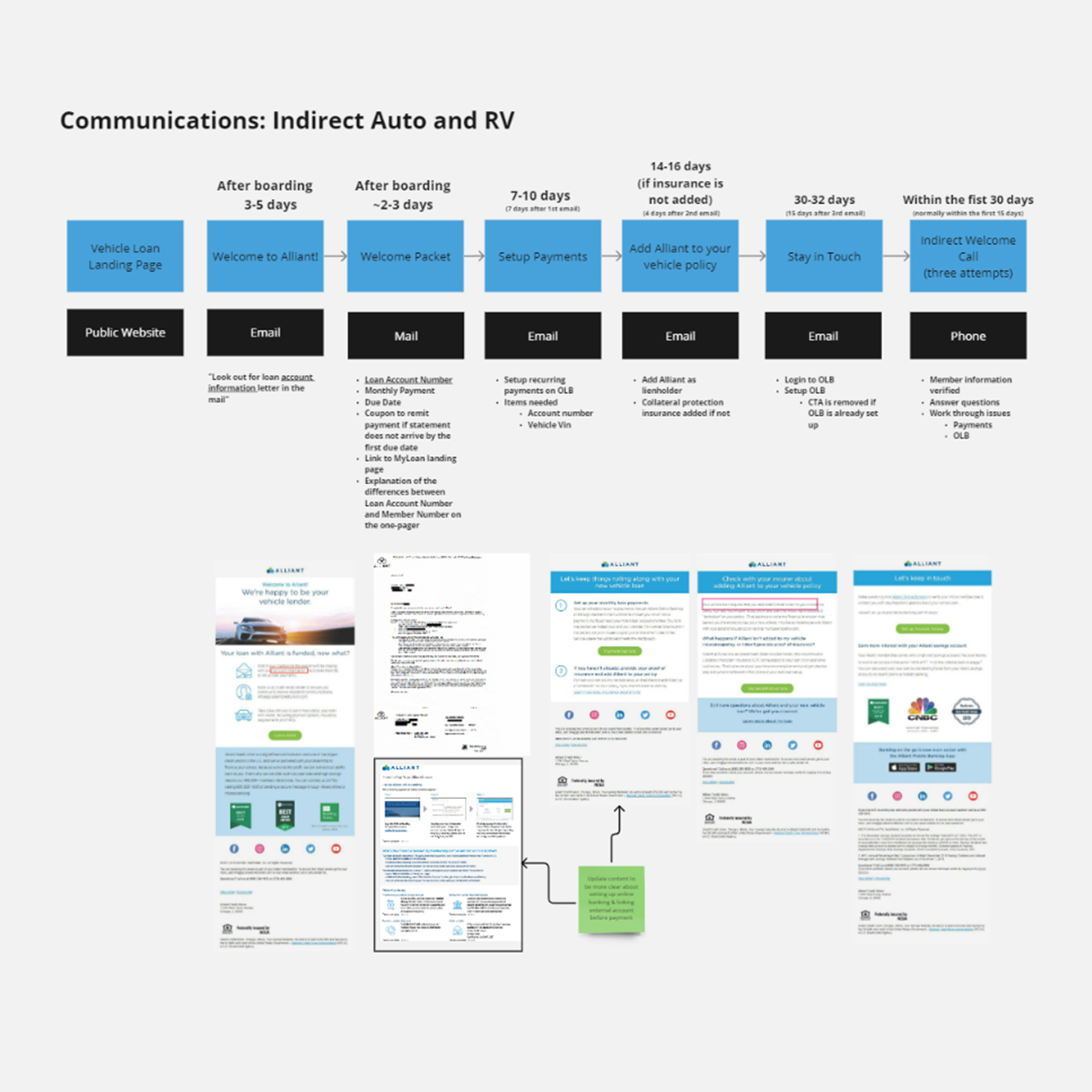
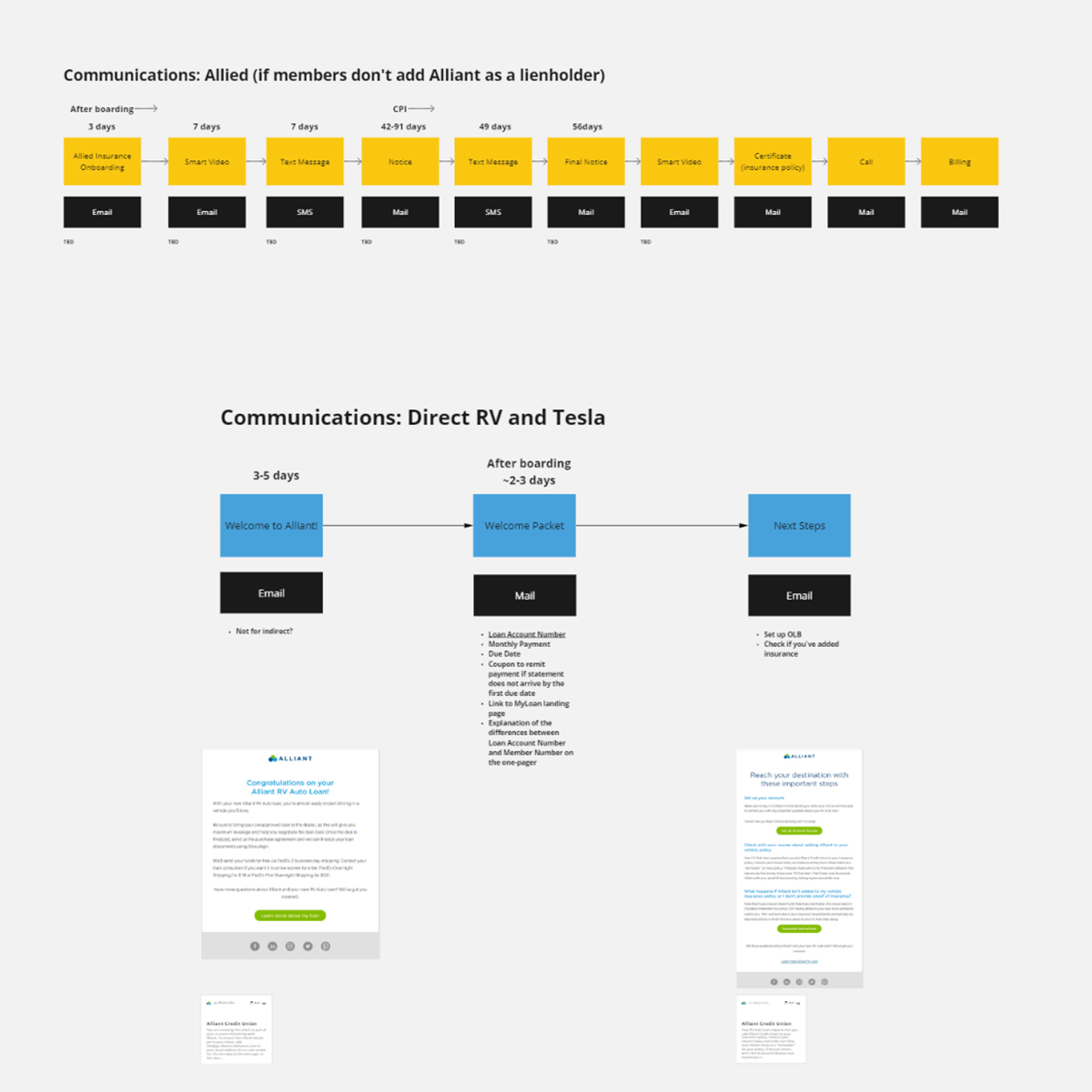
During onboarding, we proposed enabling members to activate digital channels promptly by sending secure emails containing their welcome packet details, as opposed to the current method of relying solely on traditional mail delivery.
Regarding the first payment stage, we suggested allowing one-time payments without requiring enrollment in online banking. This flexibility accommodates members who prefer not to conduct banking activities online or delay setting up digital channels initially.
For ongoing payments and activity, our recommendation was to incentivize setting up recurring payments and simplify the process through digital channels. These enhancements aim to encourage consistent engagement and ease of use for members.
These suggestions represent a portion of our comprehensive list of items that were prototyped and tested to enhance the member experience across various touch points.
Conclusion
Following the presentation of our findings, we developed a timeline outlining our next steps. All recommendations were categorized into three distinct phases.
In Phase 1, we prioritized quick win items focusing on communications, which were subsequently incorporated into the latest PI sprint for immediate action.
Phase 2 encompassed enhancements to the application experience, as well as improvements to the mobile and Online Banking (OLB) platforms, alongside operational refinements.
Phase 3 involved strategizing initiatives aimed at transforming Alliant Network members into multi-solution users. This phase included proposed changes to onboarding processes, payment methods, and feature enhancements. We indexed these proposals and shared them with stakeholders for collaborative prioritization.
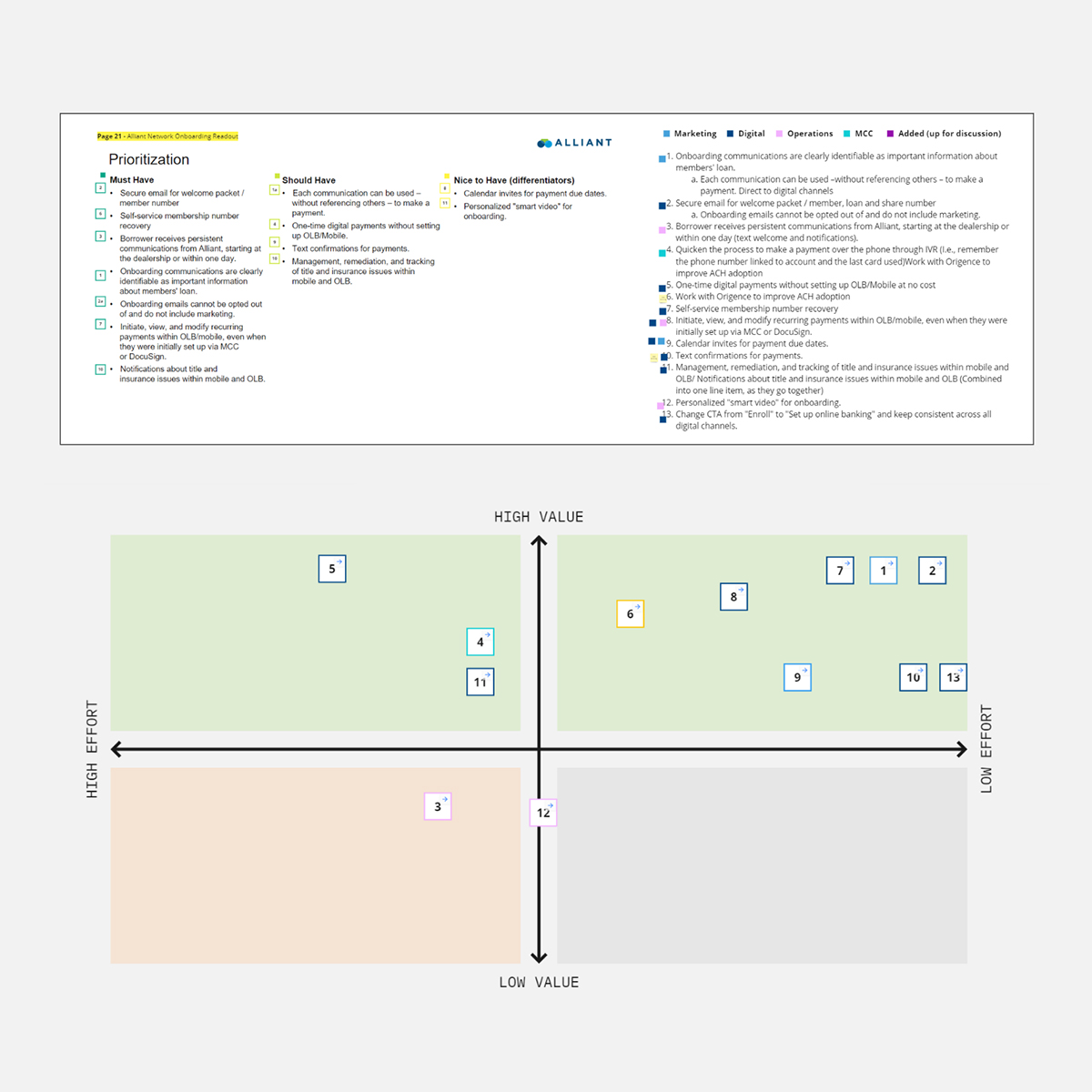
Following the dissemination of these proposed changes to stakeholders, we reconvened with the project team to conduct a workshop on a value/effort matrix. This exercise allowed us to prioritize items collectively, ensuring they were appropriately assigned to the backlog or scheduled for upcoming PI cycles.